You want to know how to do a double lift without anyone spotting two cards. Hold a small break under the top two cards, lift them as one, and show the second card as the top.
The double lift is a core sleight in the wider world of card tricks, so it is a smart skill to learn early.
| Item | Value |
|---|---|
| What the move does | Lifts two cards as one |
| Who coined the term | Theo Annemann |
| First recorded in print | 1776, in The Merry Companion |
| Easiest version for beginners | The basic double lift |
| Practice before showing a push-off double lift to an audience | At least a few months |
The history comes from Wikipedia’s double lift entry and the practice time from Rebel Magic’s tutorial. Figures like these can change as sources are revised, so check the source before you rely on them.
What a double lift actually does
A double lift is a sleight of hand move in which the top two cards are lifted as one, so it seems only the top card is picked up. It is often used as a switch, according to Wikipedia.
The audience believes it sees the top card of the deck, but in fact it sees the second card. That gap between what people think they saw and what they really saw is the whole effect.
When the pair is turned over and shown, the move is sometimes called the double turnover. The same idea can be stretched to a triple or even a quadruple lift, and some versions of the Ambitious Card routine rely almost entirely on this one sleight.
One ebook description on Lybrary calls the double lift one of the easiest and one of the hardest moves in conjuring with cards. Getting a break and showing two cards as one is simple; making sure nobody suspects it is the real work.
How to do a double lift, step by step
This five-step method follows a beginner walk-through from Rebel Magic. Read all five steps once before you pick up a deck.
- Hold the deck securely. Keep your little finger on the bottom corner of the cards, wrapped around the deck, ready for a pinky break.
- Get the break. Slide your little finger under the top two cards, tuck it beneath the second card, then square the deck up again.
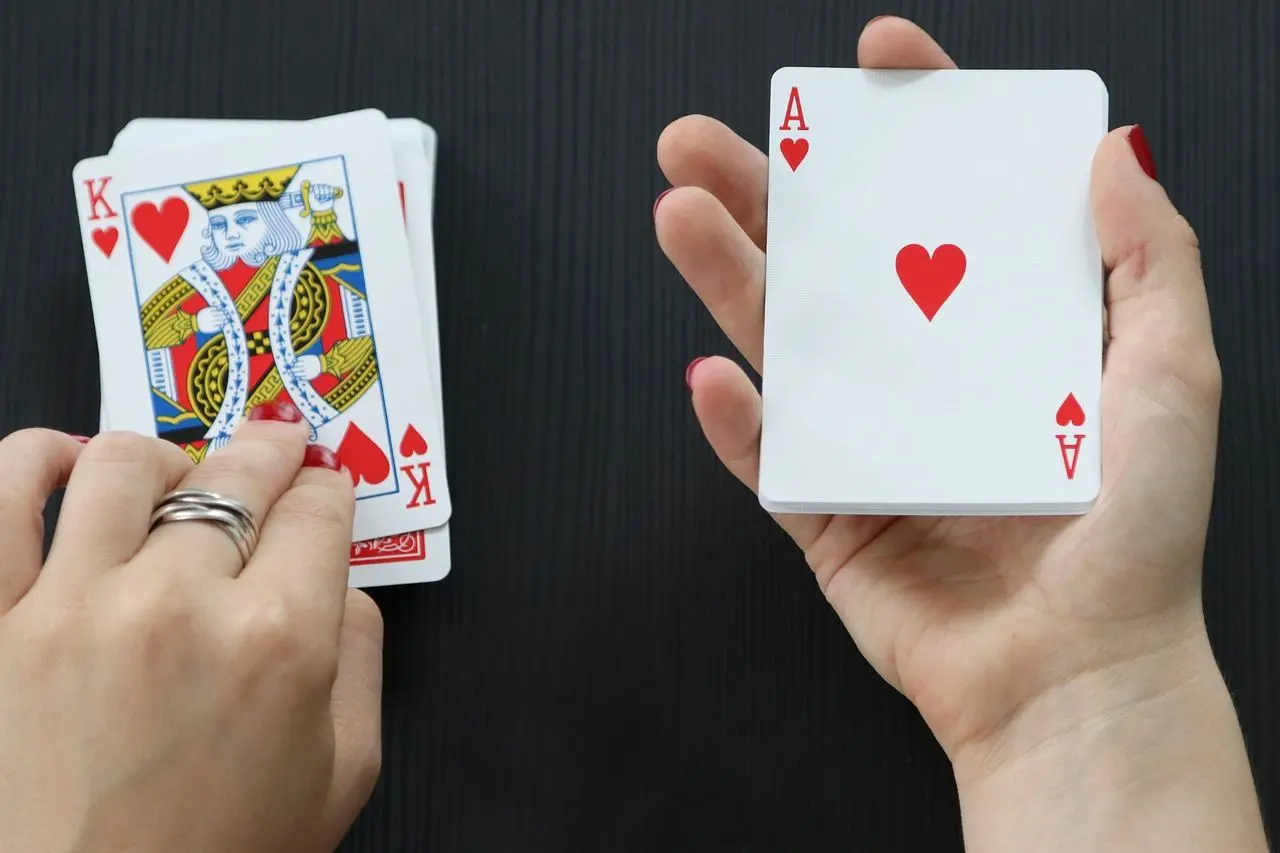
- Turn the pair over. Using the finger and thumb of your right hand, flip the two cards over together so they read as a single card.
- Turn them back. Repeat the same action to return the pair to the top of the deck, still looking like one card.
- Finish the routine. You might take off the top card and insert it into the middle of the deck, or shake the deck and reveal the spectator’s chosen card.
The tutorial advises you to practise with a mirror so you can see what the audience sees. You do not want the break to show, because that would give the game away.
Once the five steps feel smooth, repeat them until the action stops looking like a procedure and starts looking like a casual gesture.
Which double lift should you learn first?
Rebel Magic’s guide describes four common versions, and notes that the more natural a version looks, the harder it is to master. Here is how it ranks them:
- Basic double lift: by far the easiest and the best way for beginners to start, though it does not really look natural.
- Double turnover: good for beginners and a little more natural, because you turn the cards face up on top of the deck rather than lifting them. The guide says it is not concealed enough for professionals.
- Push-off double lift: one of the hardest to master, and it can be difficult with an older, flappy deck because the two cards may misalign.
- Two-card pushover: the most difficult, but also described as the most natural and reliable.
The guide says the push-off will take at least a few months of practice before you are ready to do it in front of an audience. Its author recommends the pushover to anyone willing to put in the time.
A sensible route is to start with the basic lift. As you grow more comfortable picking up two cards naturally, the guide says, the other techniques get easier to master.
How do you make a double lift look natural?
The mechanics are only part of it. Etcheverry’s ebook on Arturo de Ascanio’s approach, listed on Lybrary, says a lot influences how deceptive the move is beyond the simple physical action.
These habits help, based on the sources above:
- Handle the pair so it only ever looks like one card to the audience.
- Do it the same way every time, because audiences can detect inconsistency in a routine, as the Rebel Magic tutorial warns.
- Check your hands in a mirror before you try it on a friend.
- Study misdirection, which the Ascanio ebook treats as a central part of handling double cards innocently.
A simple first effect to try
Rebel Magic offers a quick floating card effect that needs only the move itself. You show the second card as though it were the top card, place the hidden top card into the middle of the deck, then show the new top card and say it floated back from the middle.
Because the audience thinks it saw one card travel, the reveal lands without extra props. Keep the patter short so attention stays on the card.
When you want to go further, learning how to do a card force is a natural next step, since you can then know which card the spectator holds. A tidy false shuffle is another handy companion for any routine that starts with a known top card.
Where did the double lift come from?
Per Wikipedia, the first recorded publishing is in Richard Neve’s book The Merry Companion in 1776. It next appeared in print in the 19th century in Jean Nicholas Ponsin’s Nouvelle Magie Blanche Dévoilée.
The earliest 20th century reference is in John Northern Hilliard’s Greater Magic. The term itself was coined by Theo Annemann.
Many people confuse the lift with the Dai Vernon double turnover, which extends it by flipping two cards to hide the top card’s identity. In an interview in a 1982 film, The Wonder of Magic, Vernon said he “may be the creator” of the double turnover, but he was not certain.
Frequently asked questions
Is the double lift hard to learn?
Show answer
The basic version is the gentlest place to begin. The tougher versions take months, according to Rebel Magic, because the challenge is hiding the second card rather than lifting it.
What is the difference between a double lift and a double turnover?
Show answer
The double turnover extends the lift: you turn the pair face up on the deck, show it, then turn it back. Rebel Magic rates it as beginner-friendly but too exposed for experienced performers.
Do you need a special deck?
Show answer
No, an ordinary deck of playing cards and a mirror are all the tutorial asks for. Worn, floppy cards can make the push-off harder to keep aligned.
Who invented the double lift?
Show answer
Nobody can say for certain. Wikipedia traces a printed description to 1776 and credits Theo Annemann with naming it.