You want your deck to look thoroughly mixed while the order you set stays put. A false shuffle does exactly that: start with the simple jog shuffle, and keep it casual and unhurried.
This guide sits inside the wider world of card tricks, where a convincing shuffle is often the first step of a routine.
| Item | Value |
|---|---|
| Grip and first blind shuffles in Erdnase (first edition) | pages 28 to 33 |
| False shuffles taught alongside that grip | three false shuffles |
| Blind riffles and cuts section (original edition) | pages 33 to 44 |
| Techniques in the blind riffles and cuts section | two blind riffle shuffles and four blind cuts |
| Suggested size of the injogged block | four or five cards |
These figures come from the Exploring Erdnase write-up on blind shuffles and its follow-up on blind riffles and cuts. Page numbers and details can change between editions, so check the sources before you rely on them.
What a false shuffle actually does
According to Wikipedia’s card manipulation entry, false shuffles are techniques that appear to shuffle a deck fairly while the cards are really kept in an order that suits the illusion. The audience sees mixing; you keep control.
The same entry explains that some false shuffles let you position one or more cards, while others leave the entire deck in the state it was in before the shuffle. Which one you need depends on your trick.
In The Expert at the Card Table, Erdnase calls these blind shuffles. As this book-club write-up quotes him, the aim is to retain a top stock, “the upper portion of the deck which has been prearranged for dealing”, or to retain a bottom stock.
In practice that gives you three goals:
- Keep the top cards in their prearranged order.
- Keep the bottom cards where they are.
- Keep the whole deck untouched while it looks shuffled.
Start with the grip
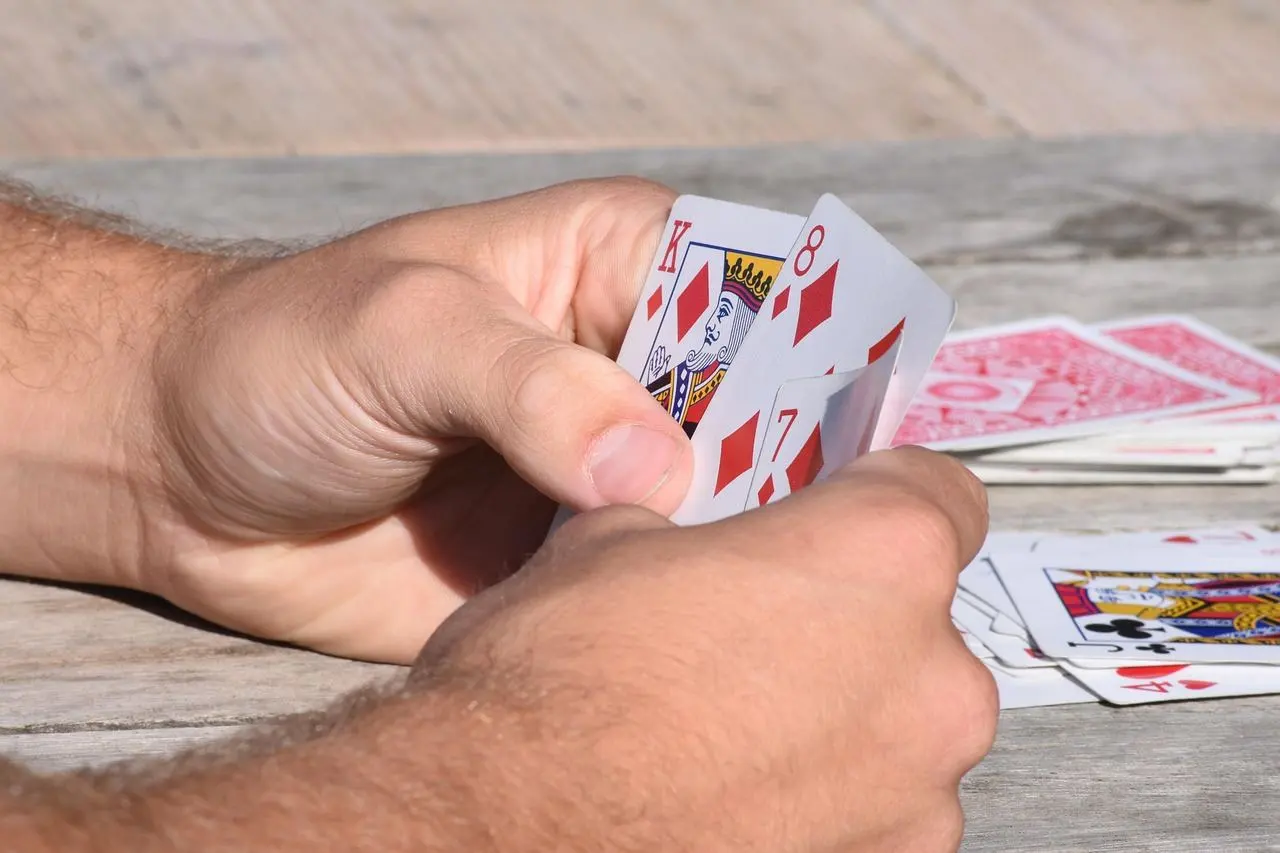
Everything in Erdnase’s system begins with the overhand grip. The write-up places the grip and three false shuffles on pages 28 to 33 of the first edition.
Erdnase singles out the first and little fingers of the left hand. He calls that position “essential for the process of blind shuffling and stocking”, and says it is also a good way to hold the deck for a true shuffle.
The same commentator adds a small tweak: curl the left little finger inward so its edge taps the top of the pack as you shuffle. That keeps the cards tidy, because too many side-jogged cards can make you lose your injogs or breaks.
The jog shuffle, step by step
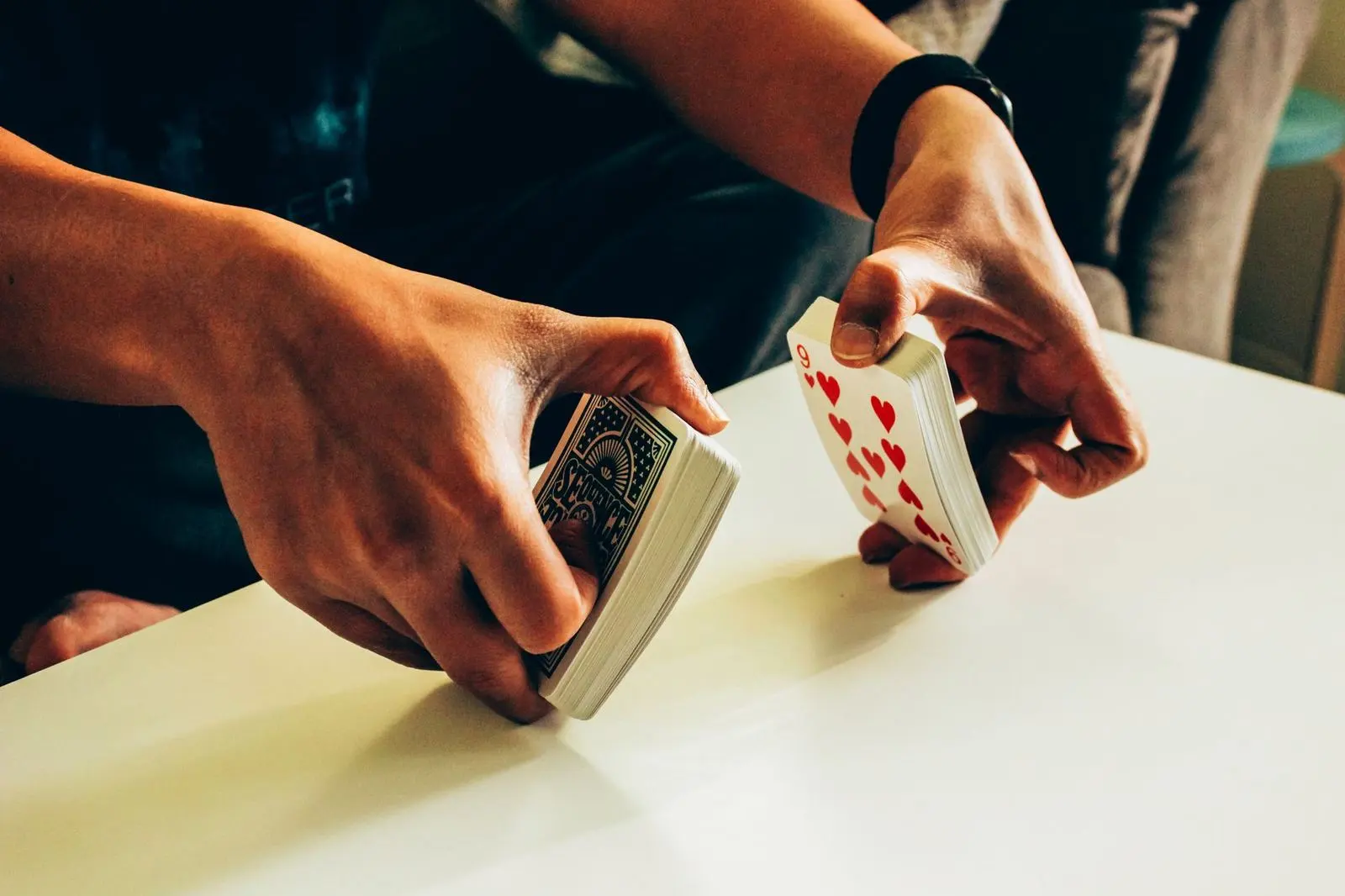
Erdnase describes this handling as the “very simplest form of the blind shuffle”, and the jog shuffle is where most people should begin. His whole description is one short line: “Under cut about half deck, in-jog first card and shuffle off.” A second instruction then has you undercut to the injog and throw those cards on top.
Broken into steps:
- Hold the deck in the overhand grip described above.
- Undercut about half the deck with your right hand.
- Shuffle off, letting the first card fall as an injog: a card left deliberately out of line with the rest.
- Undercut to the injog and throw the remaining cards on top.
Erdnase admits the weak point himself: the last movement is a throw, and it may be noticed that only part of the deck is actually shuffled. The fix is rhythm, since the write-up stresses that there must be no pause between the shuffle and the throw.
Find the jog by feel alone, or as Erdnase puts it, “solely by the sense of touch”. That lets you keep your eyes up and your handling casual.
You can also skip the final throw. Let the pack sink back into the dealer’s grip, establish a break below the injogged card, and cut to the table in three parts. This triple cut is a good way to end a series of blind shuffles.
One more practical point: the commentator injogs a small block of four or five cards rather than a single card. A block is harder to lose control of, and it looks more like an ordinary shuffle.
Keeping the top or bottom stock
The first two blind shuffles in Erdnase’s book retain the top portion of the pack, and the third maintains the bottom stock, according to the same write-up. Pick the one that protects the cards your trick depends on.
For magicians the top stock tends to matter most. A second commentary points out that far more tricks require a secret arrangement on top of the pack than on the bottom.
If your routine builds on a known card, you may pair your shuffle with a key card trick. A shuffle that leaves your setup alone is what makes that kind of effect feel fair.
Tabled riffles and blind cuts
Erdnase notes that the riffle, which means springing the ends of two packets into each other on the table, is by far the more prevalent method among regular card players. His blind riffles chapter adds that a blind cut should be alternated with each riffle, or every second one.
His riffle and cut material runs across pages 33 to 44 of the original edition, per the follow-up commentary. It contains two blind riffle shuffles and four blind cuts.
- Riffle I retains the top cards and adds one extra card to the top stock; Cut I can remove it later.
- Riffle II releases the left-hand cards first, in a block, and mixes only the top portion of the pack, which keeps the bottom stock.
- Cut II is described as a bold bluff that retains the pack’s entire order.
Listen as well as look. The first riffle looks like a genuine one, yet it doesn’t sound the same, because your thumbs release the cards unevenly.
The commentary also notes that you can hold both top and bottom stock at once: let the first few cards fall from the left thumb and the last few drop from the right.
Where to begin practising
Many people are surprised that the ordinary riffle is the hard part. Erdnase observed that comparatively few card players make a riffle with grace or smoothness, so forget about stock for now and make the plain version look easy.
A sensible order of work, based on the commentary:
- Learn a smooth, ordinary riffle shuffle.
- Add Riffle II and Cut II, which the commentator calls the easiest to learn.
- Move on to Riffle I to maintain top stock.
- Last, try the blind cuts that rely on a break, which are a little more challenging.
When the shuffle feels natural, the next sleight to study is a lift. The Wikipedia entry describes a double lift as a way to extract two cards from the deck while holding them together to appear as one, and you can learn how to do a double lift as a natural companion skill.
Frequently asked questions
Which false shuffle should a beginner learn first?
Show answer
Begin with the jog shuffle. Erdnase presented it as the first lesson in card manipulation, and one modern writer calls it very forgiving.
What if my deck is old and sticky?
Show answer
You may injog more than one card by accident. That is usually fine: so long as the block stays injogged, the extra cards do not interfere with how the shuffle works.
Do I need a table?
Show answer
Not for the overhand-style shuffles. The riffles and running cuts are tabled handlings, and the commentator says he usually prefers an overhand or Hindu-style shuffle because he performs standing.
Can I protect the top and bottom cards together?
Show answer
Yes, with a riffle. The commentary says to let a few cards drop from the left thumb first and a few from the right last, which works best when only a handful of cards must stay put.